
Helping talented filmmakers build audiences around the world since 2001 Learn More
Filmmaker Tips: Maximilien Bianchi
As a service to the young filmmakers who submit films to the YoungCuts Film Festival, we will be featuring weekly filmmaking tips from YoungCuts Alumni, Partners and Friends.
Picking the Right Gear
.jpg)
You've gone through all of the pre-production for your film and first day of production is next week! If you haven't already picked gear, read this article, it may save you a few head aches.
First thing's first, what are you recording on?
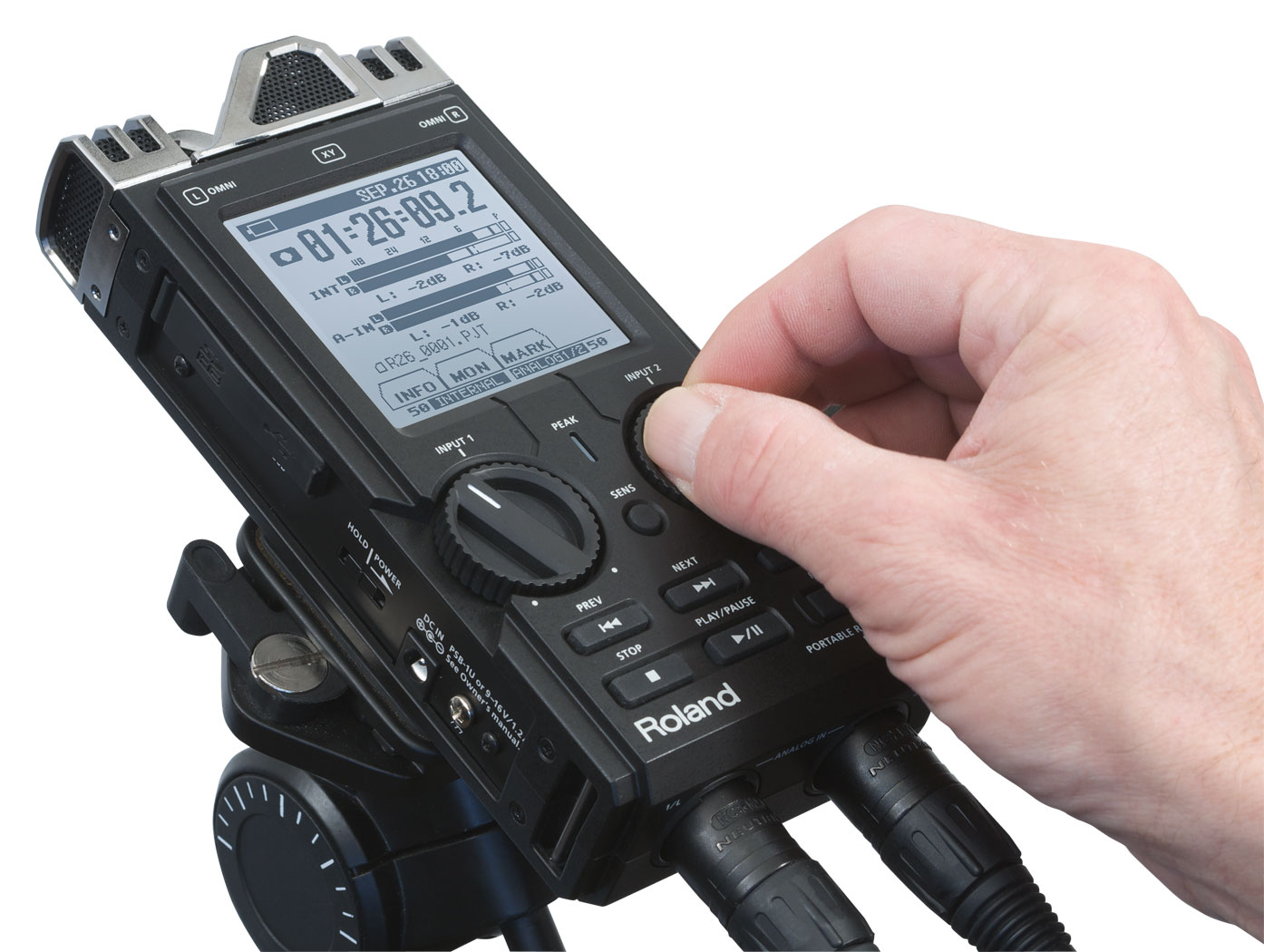
(a multi-channel portable audio recorder)
There are various options available in the portable sound recorder world, some are designed for film shoots and can generate timecodes that automatically sync the audio to video on cameras, others are for field recording and some can do both.
Your main concern however should be in the number of inputs. For example if there are three actors speaking in one shot, you're going to want something with a minimum of 3 inputs.
This is not mandatory but it does make post-production easier. You could try to place one omni microphone in the middle of the set and hope that everyone's voice registers but levels will be hard to adjust and will make the sound mixer's job incredibly difficult.
Next you'll want to choose the right microphones.
There are a million and one different situations with a million and one different microphones for each one of those jobs. All you really need to know, however, is the different types of microphones and what they're good at. If you think everything through, you will make the right choice.
a)Shotgun (hypercardioid) microphones.
Probably the most commonly used microphones on film sets, these mics "cut out" surrounding noise (up to an extent) and focus on whatever you are pointing them at. Mostly used to record dialog or specific environmental sounds. These are the mics that you often see attached to the end of boom polls.
When there are many speaking actors in one shot however, boom-mounted mics quickly become a hazard in terms of moving cables, various polls and casting shadows on the set. One skilled boom operator could possibly record two actors if they were close enough but this may not be the ideal situation.

(an example of a shotgun or hypercardioid microphone)
b)Lavalier Microphones (wired or wireless).
These are "clip-on" microphones that are almost exclusively used to record dialogue when many speaking actors are in the same scene or if the recordist cannot get close to the actor without being in the shot or casting a shadow.
The problem with lavaliers is that they tend to be expensive and can make a lot of handling noise if the actors move too much. Wireless Lavs also require extra batteries and expert use of makeup and costume work in order to hide them well.
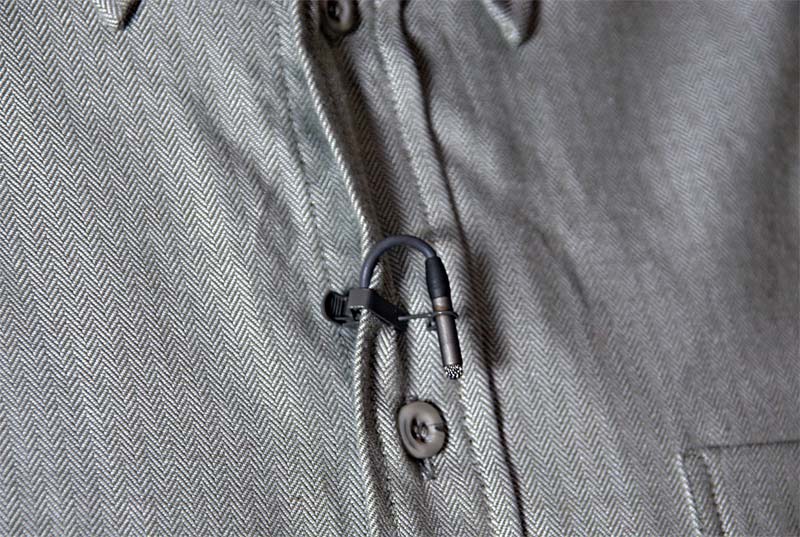
(a lavalier microphone)
c)Omni, stereo and hidden set ups.
Omni mics are rare on set but they are good for catching room tone, ambience and general sounds. Other ways to get non-dialog and on-set sounds is to have two cardioid microphones in a stereo set up. This provides a richer recording on specific events and sounds because it provides a stereo sound image.
Hiding mics in a set is an option that should only be used when it's 100% necessary. While it does make recording easier, set up and take down is long and it may become a nightmare for set designers and blocking while filming.
Don't forget everything else!
A few seemingly small but vital things for film sound production.
1. Boom Poll! A nice sturdy boom poll will reduce handling noise and give your arms a nice workout at the same time.
2. Mic Stands and clips if required or if filming stage performers.
3. Cables. Make sure you have enough cables for every situation. Check your shot list and look at what you will need, then check it again. Remember to bring spares if you can!
4. Zepelin's, Softies, or any wind screen for any mic that will be used outdoors or if they are to move while filming.
5. Data storage if not built in to the device (i.e. sd cards, hard drives, etc.)
6. Batteries, batteries and more batteries. Also bring a few spare batteries. (p.s. batteries)
7. Tape. Never underestimate the power of tape, it's not only for the gaffer or lighting technician.
8. A good pair of head phones to monitor the whole thing.
9. Spares of anything and everything. Use your best judgment but plan for the worst.
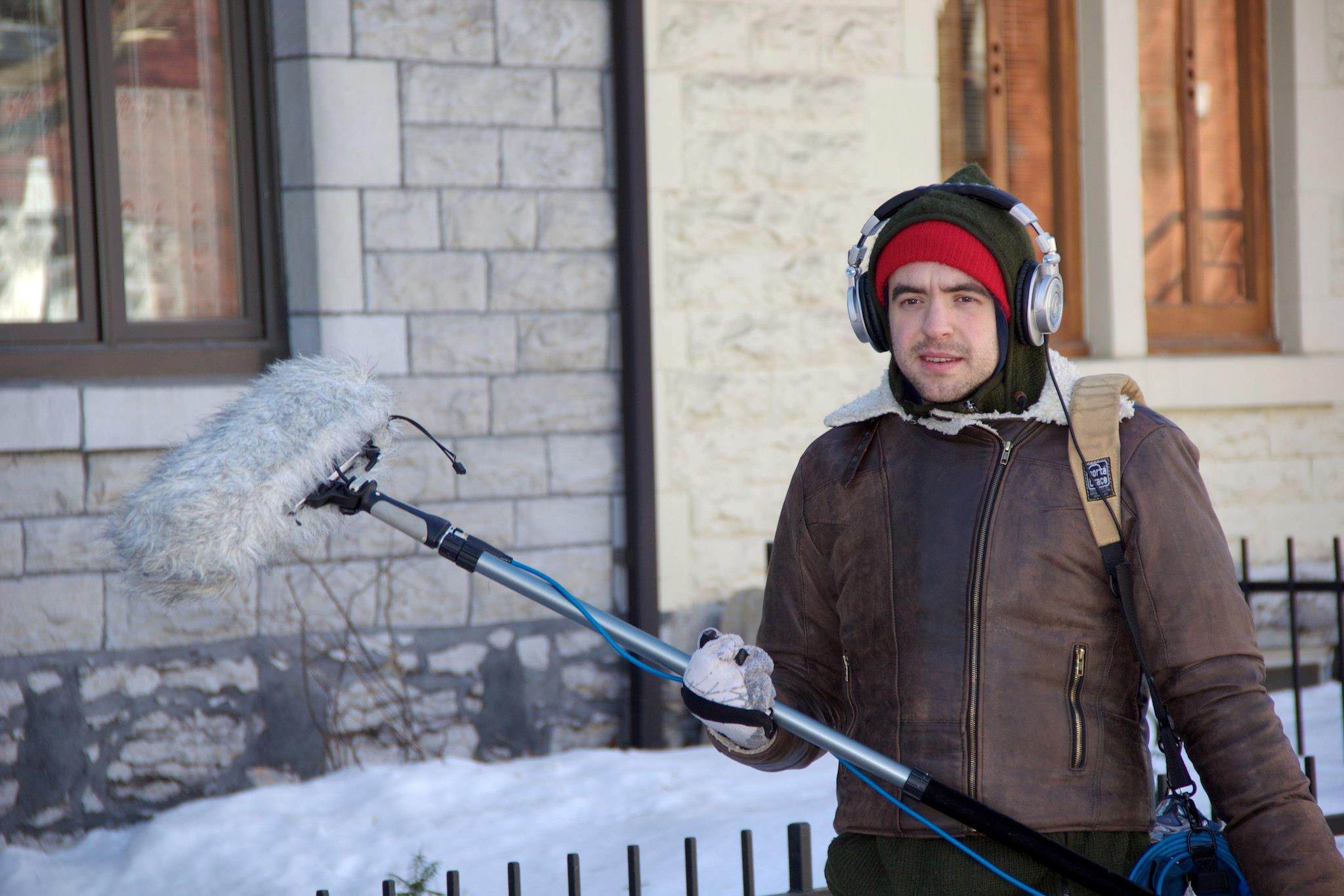
(a prepared recordist is a happy recordist!!)
You should be well on your way now to make a sound judgment for gear (get it?). This certainly is not the only resource for information like this, there's a few books and websites dedicated to these subjects, but remember, your best tool is organization.
*****
Maximilien is in his final year of sound production in the Communications Department of Concordia University. Follow Maximillien on Twitter: @MaximilienSound
*****
Agree with Max? Disagree? Have your own filmmaker tips, best practices or mistakes to avoid that you would like to share? Get in touch! E-Mail the YoungCuts Film Festival Director: festivaldirector@YoungCuts.com